Drive through Worthington, walk an older Columbus neighborhood, or scroll a local real estate listing, and you’ll spot them: low rooflines, walls of glass, and homes that seem to grow out of their lots. That’s mid-century modern design, and it has a strong presence in Central Ohio. If you’ve ever wondered what mid-century modern actually means, where it came from, and why it shows up so often around Columbus, this guide covers it. We’ll also look at how homeowners are renovating these homes today.
What Is Mid-Century Modern?
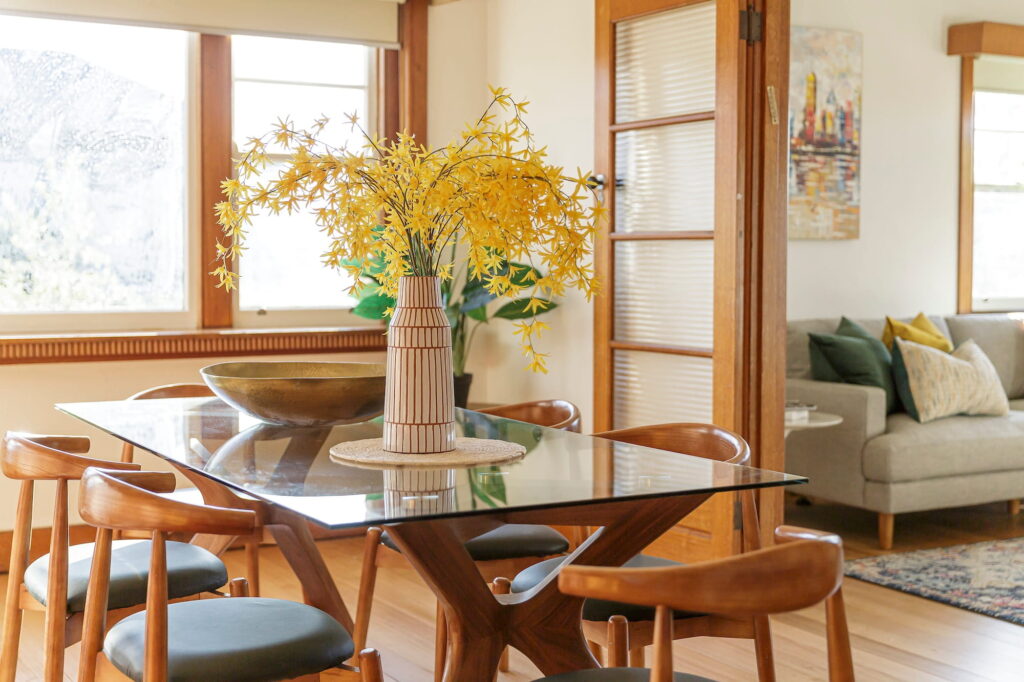
Mid-century modern is easiest to spot once you know the handful of traits that define it. At its core, it’s a school of design that focuses on function over form, but in doing so, it created a unique aesthetic that gained popularity in the mid-1940s through the 1960s. It’s characterized by:
- Clean lines, function first, little ornamentation
- Large windows, open floor plans, and a close tie to nature
- Natural materials such as wood, brick, and stone
Mid-century modern is an architecture and design style that took shape in the years after World War II. It favors simplicity over decoration. Homes built in this style tend to have low-pitched or flat roofs, open living spaces, and large expanses of glass that pull the outdoors in. Interior details often include warm wood, built-in storage, and uncluttered layouts where every element has a job.
The style grew out of a practical moment. Families were growing, new neighborhoods were expanding, and designers wanted homes that felt modern, livable, and connected to their surroundings. That mix of practicality and beauty is a big reason the look has never really gone away.
Rush Creek Village: Columbus’s Mid-Century Modern Landmark
Any conversation about mid-century modern architecture in Columbus starts with Rush Creek Village, a neighborhood in Worthington, just north of Columbus. The story begins in 1946, when Martha and Richard Wakefield visited Frank Lloyd Wright at his Arizona studio. Wright encouraged Martha to go home and build a house for herself, then one for her neighbor. She took that advice seriously. In 1954, the Wakefields teamed up with architect Theodore van Fossen to begin shaping a community of custom homes inspired by Wright’s Usonian and organic architecture ideas.
The result is a neighborhood of roughly 50 homes, each designed around its owners and its site. Streets and houses follow the natural ravines and wooded terrain rather than fighting it. The homes also used traditional construction methods suited to Ohio winters, which helps explain why the neighborhood has held up so well. Today, Rush Creek Village is listed on the National Register of Historic Places and is considered one of the most complete collections of Wright-inspired homes in the country.
Rush Creek Village isn’t the only reason mid-century design is so visible here, but it showed Central Ohio what modern living could look like, and its influence is easy to see in the homes built and remodeled around it.
You can see similar ideas in the residential renovation projects we take on across the Columbus area.
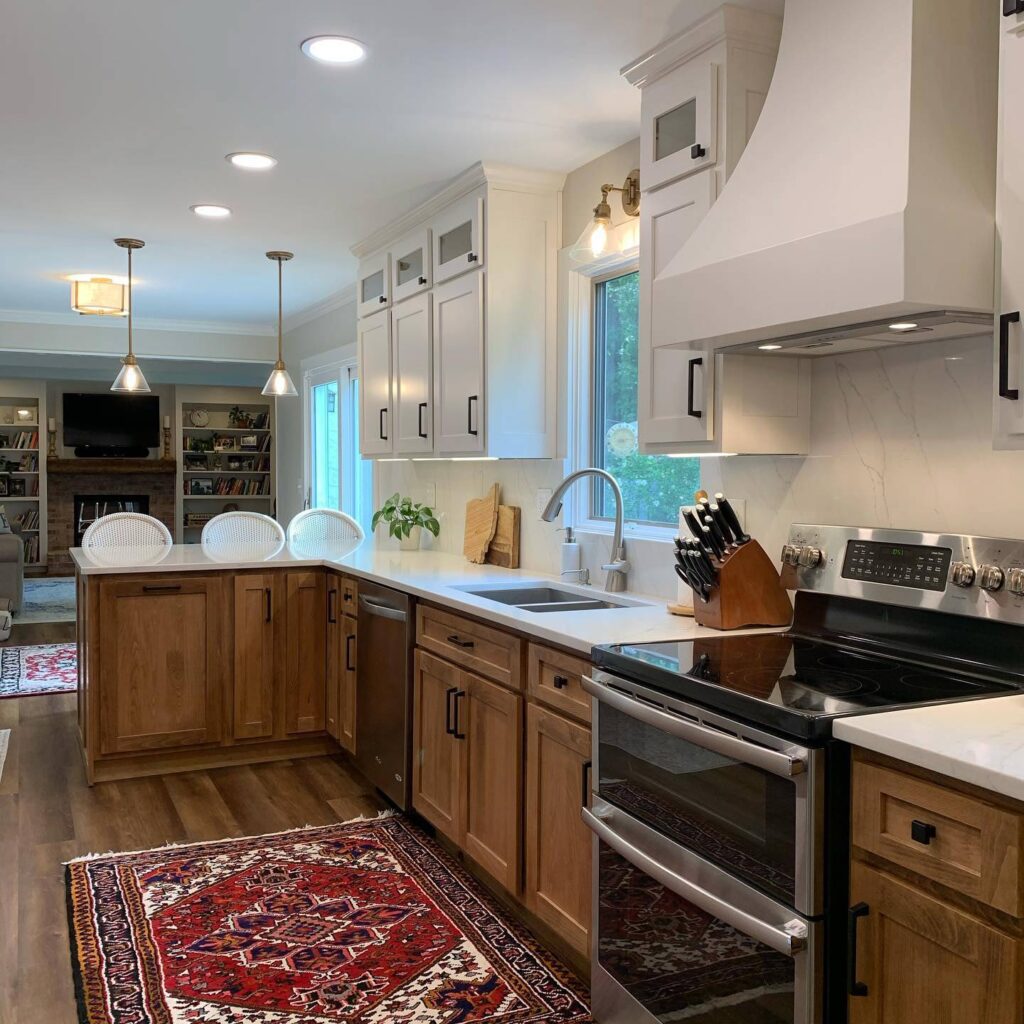
For example, this eclectic transitional kitchen features warm walnut-tone cabinetry that anchors this Columbus kitchen and nods to one of mid-century design’s signature materials. Mid-century designers favored natural wood for its warmth, and here it softens a space filled with clean lines and simple forms. Gold light fixtures and bold pops of color echo the era’s love of confident accents against a calm backdrop.
This project features a sleek black bar that is a natural fit for mid-century thinking, where built-in storage and entertaining space were central to how homes were designed. The dark cabinetry, silver fixtures, and glass-front display keep the look streamlined and functional. Earth-toned stone and floating wood shelves add the natural texture and lightness the style is known for.
Renovating a Mid-Century Modern Home in Columbus
Updating a mid-century home takes a careful balance. While popular with buyers, these homes often need updates and modernization.
Owning a mid-century home is a bit like caring for a piece of design history. The bones are often excellent, but older kitchens, dated baths, and aging systems can hold a home back. A good renovation respects the original architecture while making daily life easier. Here is how we think about it.
Preserve What Makes the Style Special
The rooflines, window patterns, and natural materials are what give these homes their identity. Before changing anything, it helps to decide which original features are worth keeping, such as wood paneling, built-ins, brick or stone walls, and ribbon windows. Thoughtful updates should work with those elements rather than cover them up.
Update Kitchens and Baths With Care
Kitchens and bathrooms are where most mid-century homes need the biggest upgrade. Original layouts tend to be compact and closed off. Modernizing them can mean improving storage, updating appliances and plumbing, and opening sightlines, all while keeping materials and finishes that feel at home in the era. Flat-panel cabinetry, simple hardware, and warm wood tones are natural fits. Our residential renovation services cover both kitchens and baths.
Though this project leans more toward a modern farmhouse look, the metal-edged mirrors bring the crisp, uncluttered lines that define mid-century design into this bathroom. Paired with silver fixtures and simple cabinetry, they show the style’s focus on restraint and function over decoration. The warm neutral palette keeps the space calm and timeless, which is exactly why these principles still work today.
Open Up to Light and Landscape
Mid-century design is built around the relationship between inside and outside. Renovations often focus on bringing in more daylight, improving window performance, and strengthening the connection to patios, decks, and yards. Done well, these changes make a home feel brighter and more spacious without altering its character.
Natural light and sculptural lighting do much of the work in this Columbus bathroom, and both are hallmarks of mid-century design. Glass shower doors keep the space open and let daylight travel freely, while a bamboo window shade filters it softly instead of blocking it. The pendant light adds the kind of statement fixture mid-century designers loved, treating a light as both a functional tool and a design object. Crisp white walls, a freestanding tub, and touches of natural brown, like the planter and ferns, keep the look clean and connected to nature.
Mid-Century Modern Renovation With CORE
Mid-century modern isn’t just a look in Columbus. It’s part of the region’s architectural story, from Rush Creek Village to the many homes across Central Ohio that share its spirit. At CORE, we’re a locally owned design and build team, which means one team handles your renovation from concept through construction. Whether you own a mid-century classic or simply love the style, we’d be glad to talk through your goals.
Ready to start your Columbus home renovation? Contact us today to schedule a consultation.